
Over the past several years, I’ve sat with grieving parents, talked with school counselors, heard from law enforcement, and listened to teenagers trying to navigate an increasingly complicated world.
One thing has become painfully clear.
Vaping is not harmless. And the retail environment around our kids is not accidental.
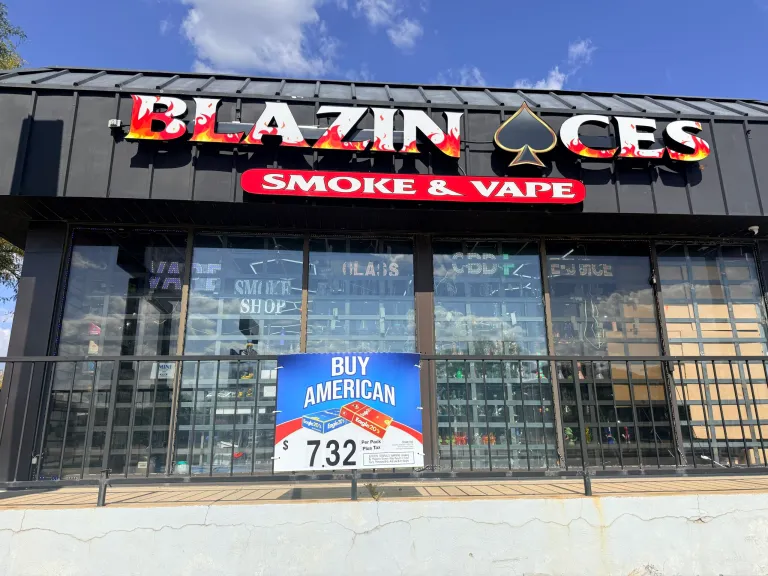
Across South Dakota, vape shops are clustering near schools, marketing flavored products that appeal to youth, and in some cases selling items that are illegal, mislabeled, or downright dangerous. Our current laws simply were not written for the reality we face today.
And our children are paying the price.
Vape shops near schools aren’t accidental
As part of the Emily’s Hope Youth Prevention Coalition, we reviewed where vape shops are located in relation to schools.
Here’s what we found:
• Sioux Falls: 5 vape shops are located within 1/4 mile of a school
• Rapid City: 6 vape shops are located within 1/4 mile of a school
That means students are walking or driving past storefronts filled with brightly packaged, candy-flavored nicotine products on a regular basis.
These products are intentionally designed to appeal to kids. And when children see them every day, they begin to look normal, harmless, and easily within reach.
Right now in South Dakota, a vape shop can legally operate directly across the street from a school — as long as it doesn’t hand out free samples.
We would never accept that standard for alcohol. We wouldn’t tolerate it for marijuana dispensaries. Yet nicotine, a substance that rewires developing brains and primes kids for addiction, remains an exception.
When vape shops aren’t just selling nicotine
Regulation isn’t only about where these stores are located. It’s also about what is being sold inside.
Recently, statewide undercover investigations revealed vape and smoke shops selling:
• illegal psilocybin mushrooms
• high-THC marijuana products disguised as “hemp”
• chemically altered compounds designed to skirt the law
In one case, a shop accused of selling illegal substances was operating inside a school zone.


Another troubling trend emerged — “magic mushroom” chocolate bars marketed as novelty products. Labels listed mysterious “proprietary mushroom blends,” carried disclaimers, and lacked clear safety oversight. National health agencies have already issued warnings after severe illnesses — and even deaths — linked to similar products.

This is not simply about vaping.
It is about an industry that pushes addictive substances, exploits loopholes, and too often treats our kids as a market opportunity.
The reality inside our schools
Teachers tell me they find vape devices in bathrooms, hallways, and backpacks. One school resource officer told me that kids as young as second and third grade have been caught with vapes. Some students admit they can’t get through the school day without nicotine.
Nicotine is not a harmless habit.
It hijacks developing brains.
It increases anxiety and depression.
It raises the risk of future substance dependency.
And once kids are hooked, quitting becomes incredibly hard.
Yet despite all of this, South Dakota has very few meaningful rules about where vape shops can operate or how retailers are held accountable when they cross the line.
A double standard in enforcement
There is another gap most people never see.
In South Dakota, law enforcement regularly conducts compliance checks on liquor stores. Underage decoys try to purchase alcohol. If clerks fail to check ID or sell illegally, there are consequences such as fines, suspensions, and sometimes loss of license.
But when it comes to vape shops, that kind of routine oversight is virtually nonexistent.
There are no coordinated, statewide police stings designed specifically to ensure vape retailers aren’t selling to kids. No consistent compliance program. No parallel system of accountability.
In an industry built around addictive, youth-appealing products, we are essentially relying on the honor system.
That is not fair to parents. It is not fair to schools. And it is certainly not fair to our kids.
The public deserves to know: there is a path forward
Regulation is not prohibition.
Adults who legally choose to use nicotine will still be able to. But as a state, we can — and should — put guardrails in place that protect children.
Here is what a responsible, common-sense approach could look like:
- Statewide licensing for every vape and tobacco retailer.
Selling nicotine products should be treated as a privilege. Licenses can be suspended or revoked when stores repeatedly violate the law. - Distance requirements between vape shops and schools.
Establishing a reasonable buffer reduces daily exposure, temptation, and normalization. - Real penalties — not token fines.
Stores that ignore the law should not simply treat violations as a “cost of doing business.” - Dedicated funding for prevention and enforcement.
A vaping excise tax could help support compliance checks, youth education, and public health programs.
Many states already do this. South Dakota can, too.
Why Emily’s Hope is engaged in this work
Our Youth Prevention Coalition took on this initiative because we see, every day, the impact of vaping on children and families.
We hear from parents who are scared.
We hear from schools overwhelmed by constant vaping.
We hear from kids who wish they had never tried that first puff.
We believe young people deserve environments that support healthy choices — not environments engineered to profit from addiction.
Your voice matters
Policy change does not happen in silence.
If you believe vape shops should not be clustered near schools…
If you believe illegal and dangerous products should not be sold in retail stores…
If you believe our kids deserve stronger protections…
Here’s how you can help:
• Share this article with others in your community.
• Remind them this is not about politics — it is about protecting children.
Our kids should not have to walk past addiction marketing on their way to school.
We have the evidence.
We have real-world examples.
And now, we need the courage to act.
Together, we can build safer environments, smarter policies, and healthier futures for South Dakota’s youth.
Leave a Reply